
Ask around and you will certainly hear the same answer: nowadays, in the business world, everyone collaborates – or is at least supposed to! Yet, on closer inspection, it is not so obvious: attending meetings and using collaborative apps and platforms in a de-hierarchized environment are not enough to guarantee the existence or the quality of “real” collaboration…
What conditions, behaviors and attitudes lead to truly effective and productive collaboration?
The finding is clear: collaboration is a crucial skill for successfully navigating a globalized and increasingly VUCA world of work – an acronym that expresses volatility, uncertainty, complexity and ambiguity. The world – society, work, individuals – is changing at an unprecedented speed. We have entered a technological revolution that is fundamentally changing the way we live, work and interact with one another. In this new situation, the ability of individuals to connect and collaborate effectively is therefore more critical than ever to cope with and successfully navigate an increasingly complex and uncertain environment. As stated in a World Economic Forum report, by 2020, more than a third of the key skills required in most professions will include skills that are not yet considered essential to work today! Overall, demand is expected to grow for social and collaboration skills, which will necessarily complement technical skills. Revolution, did you say revolution?
Multiple obstacles

So what about collaboration in the business world today? All too often, it only gets attention when it hits an obstacle – or worse, when a conflict breaks out. In practice, the obstacles are many and appear at several levels:
- At the individual level first: we all have different mental models, behavioral orientations and leadership styles which, when they clash, become so many potential grains of sand in the gears of collaboration.
- At the interpersonal or group level next: these are rooted in the history and legacy of the team; most often they are latent conflicts, never acknowledged or resolved, but also false beliefs, stereotypes and biases that come into play to divide, create “camps”, and act as barriers to collaboration. At the extreme, we speak of a toxic team. Patrick Lencioni, author and specialist in team management, highlighted the 5 major dysfunctions of a team and their origins: absence of trust, fear of conflict, lack of commitment, avoidance of accountability, inattention to results. These elements help to better understand what is at stake at the individual and group levels, and also show that a dysfunction that is not addressed often leads to a more serious one.
- Finally, at the organizational level, cultural and structural obstacles hinder collaboration: typically a culture that values competition between employees and encourages power games, a very hierarchical and/or standardized organization, etc. In practice, the difficulties arise in situations that affect large multinationals as much as SMEs: change management in a context of digitalization, strong cultural diversity, employees located on different sites and/or in different countries, very hierarchical structures and conformist behaviors linked to cultural norms, employees lacking an overall vision, i.e. little visibility beyond their own objectives/activities, etc.
Collaborate… what for?
Real collaboration goes beyond the simple flow of information within the team or teams; it requires a real focus on a spirit of sharing and involving others in generating new ideas, solutions, etc. To collaborate truly and effectively, you first need to define the framework, objectives and success criteria of the collaboration, put the interest of the group before your own, not only communicate effectively but also be able to give others constructive feedback proactively, and finally lead by example – “I do what I said I would do”. The Radical Collaboration® approach defines 5 key skills for effective collaborative relationships: collaborative intention, openness to others, individual responsibility, self-awareness and, finally, an effective methodology for negotiation and problem-solving.
Not only can the VUCA challenges of the 21st century only be solved through collaboration, but collaboration is in fact directly linked to productivity and profitability. Yes, but collaboration is a “soft” idea, some will say, yet another pearl to thread on the personal development necklace! Only a competitive environment produces results – a belief that is unfortunately widespread and still deeply rooted in many minds, not only among leaders but also among employees of all kinds. WRONG! cry many leadership specialists in unison: not only can the VUCA challenges of the 21st century only be solved through collaboration, but collaboration is in fact directly linked to productivity and profitability! Moreover, several case studies from the global economic landscape confirm it: the trend towards “hyper-collaboration” is very real, whether between competitors in a highly competitive market, with a view to reducing costs or improving profitability (e.g. Nestlé and Starbucks, UPS and US Postal Service), or in another register, between organizations whose missions and values are a priori antagonistic (e.g. Coca-Cola and WWF).
But back to the company: what becomes possible in a truly collaborative space?
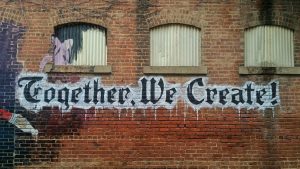
More creativity, innovation, anticipation and options for solving problems, but also, and this is crucial in a constantly changing environment, a space for activating people’s potential.
Co-constructing collaboration
What paths can leaders – HR directors, managers and executives – follow to create and establish a real culture of collaboration?
- Raise awareness : what collaboration is (e.g. behaviors, attitudes, …), what its benefits are and what it looks like in my organization (e.g. inclusion in the values, the skills framework, etc.), which false beliefs need to be deconstructed (e.g. “collaboration is a soft consensus, it slows down decision-making”), which biases need to be fought (e.g. in favor of extraversion – which implicitly suggests that collaboration is necessarily a noisy brainstorming session…)
- Eliminate or reduce obstacles : by working on all 3 levels in parallel – individual, group, organizational
- Train team managers : develop their ability to prevent, detect and act early on team tensions and conflicts (team caring), and to build the famous “circle of safety”, described in particular by author and speaker Simon Sinek , leadership specialist, in his book “Leaders Eat Last”: “A group’s ability to achieve excellent results depends on how well its members are able to join forces. And this does not happen in a vacuum. (…) By creating a circle of safety around employees, the leader reduces the threats people feel within the group, which frees them to devote more time and energy to protecting the organization from external dangers and seizing opportunities. Without a circle of safety, people are forced to spend too much time and energy protecting themselves from one another. (…) When the circle is strong (…), the result is collaboration, trust and innovation.” This directly echoes the results of Project Aristotle, a research project conducted in recent years by Google, which tried to answer the following question: what is the fundamental component of a team’s success? Answer: psychological safety, which allows employees to feel confident, to open up to their colleagues and to take risks. QED!
- Empower and support all employees : rather than placing all the responsibility for collaboration on the shoulders of team managers, everyone can be brought to realize that collaboration is the result of co-construction, e.g. through awareness of one’s own behavioral style, via assessment tools, but also by promoting feedback as a constructive, everyday practice within the team, through experiential training and the contribution of coaching.
Conclusion
Collaboration is such a fundamental aspect for companies and their future in a VUCA and digitalized world thatit is urgent to give it a central place in training and organizational development initiatives. We can predict that in the future it will also have to play a leading role in guiding HR departments as practices, processes and tools evolve. This can already be clearly seen in the fields of performance and compensation management: too much emphasis on individual performance often leads to… less collaboration!
Written by: Laurence Waeber ✪ Consultant and Project Manager, Digital & Innovation @Direction Plus